Focus
Product clarity
Project case study
Network Ace needed more than a website. It needed a first impression that explained the product clearly, built trust quickly, and felt aligned with a growing community platform.
Focus
Product clarity
Audience
London tennis players
Priority
Trust and sign-up path
Context
Network Ace is a social tennis platform focused on helping players in London find games, organise sessions, and stay connected without the usual friction of group chats and scattered tools.
The goal was not just to put a site online, but to create something that felt like a real product from the first interaction.
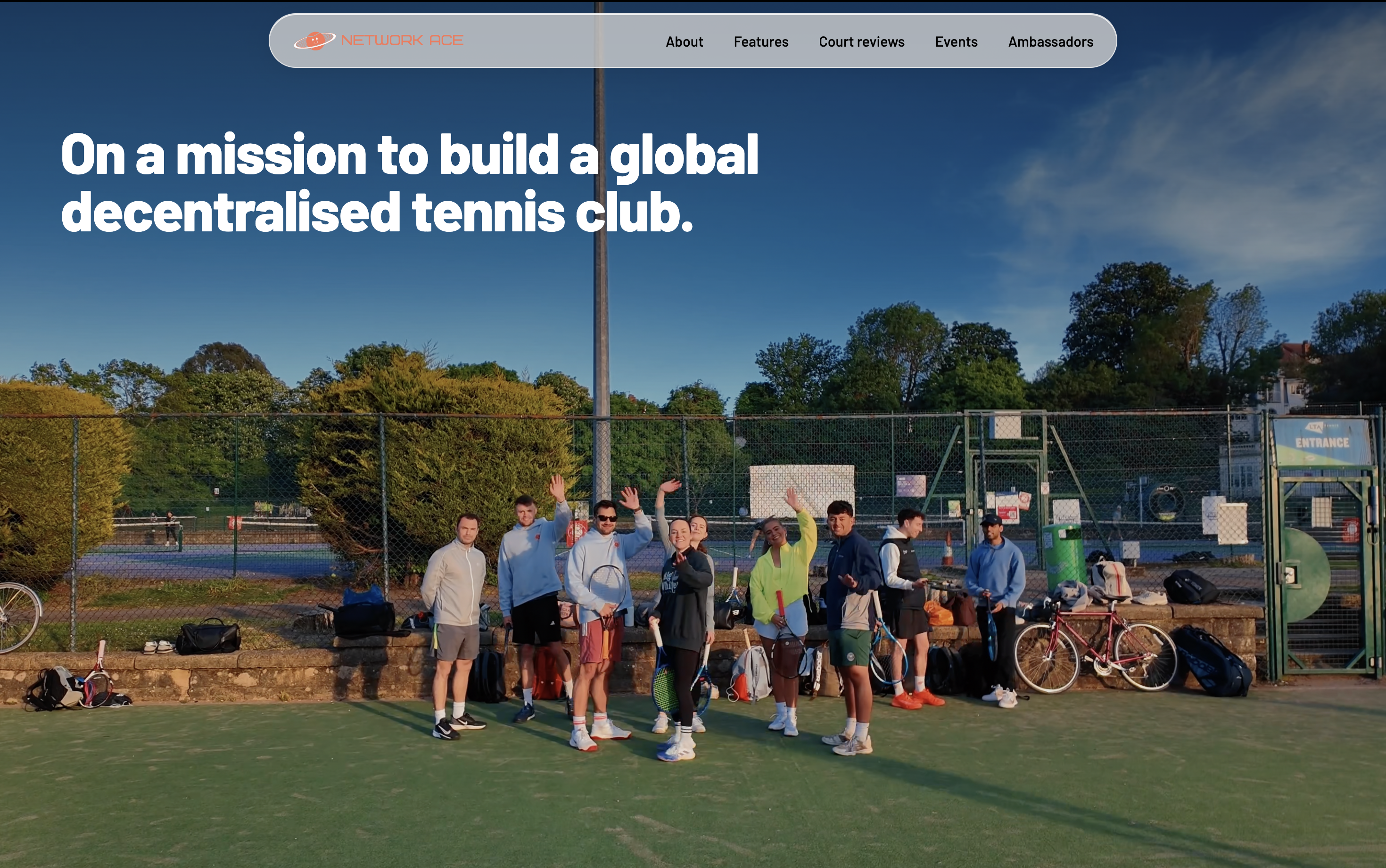
Brand direction
The brand needed to sit between two extremes. Tennis can easily feel too traditional or too casual, and neither matched the product.
The visual direction was shaped to feel clean, modern, and organised, but still warm enough to feel community-driven rather than corporate.
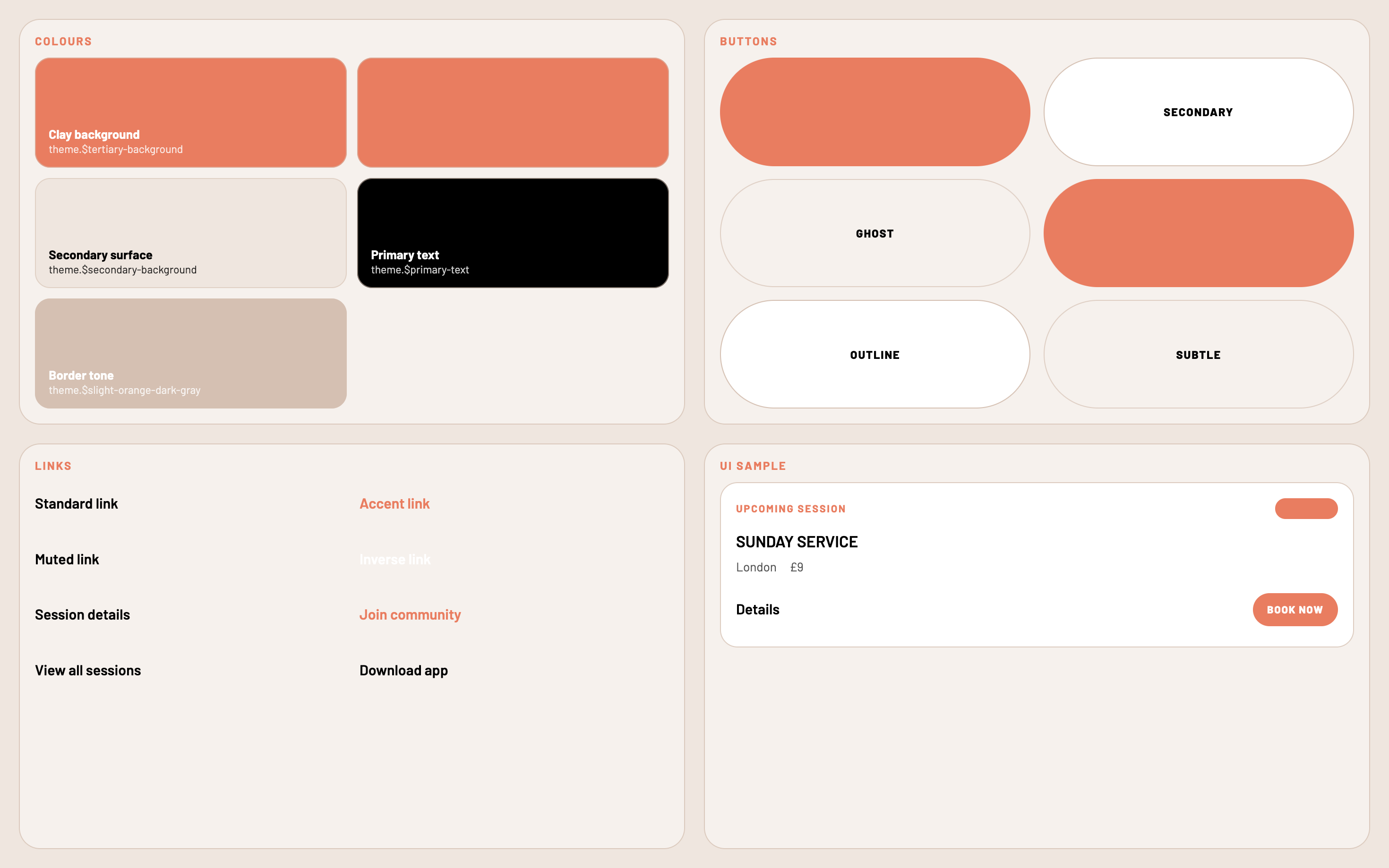
Structure
Each page was approached as part of a product introduction rather than a disconnected collection of marketing sections.
The structure needed to answer a simple question quickly: what is this, and why should someone care enough to sign up?
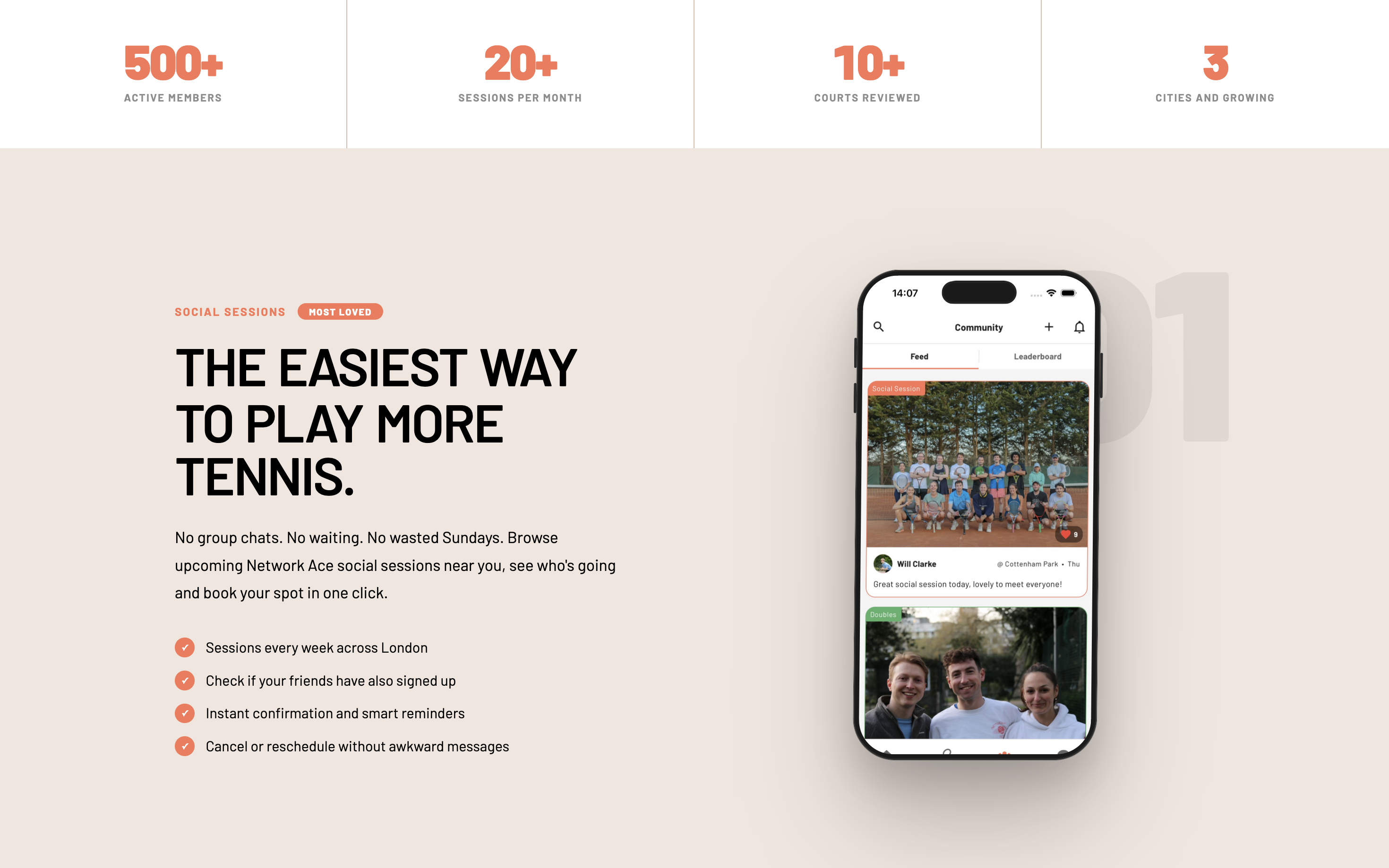
Trust
Because people are deciding whether they would actually use the platform to organise real games, the site needed to feel trustworthy very quickly.
That meant paying attention to typography, spacing, motion, and copy so that everything felt intentional and dependable instead of decorative.
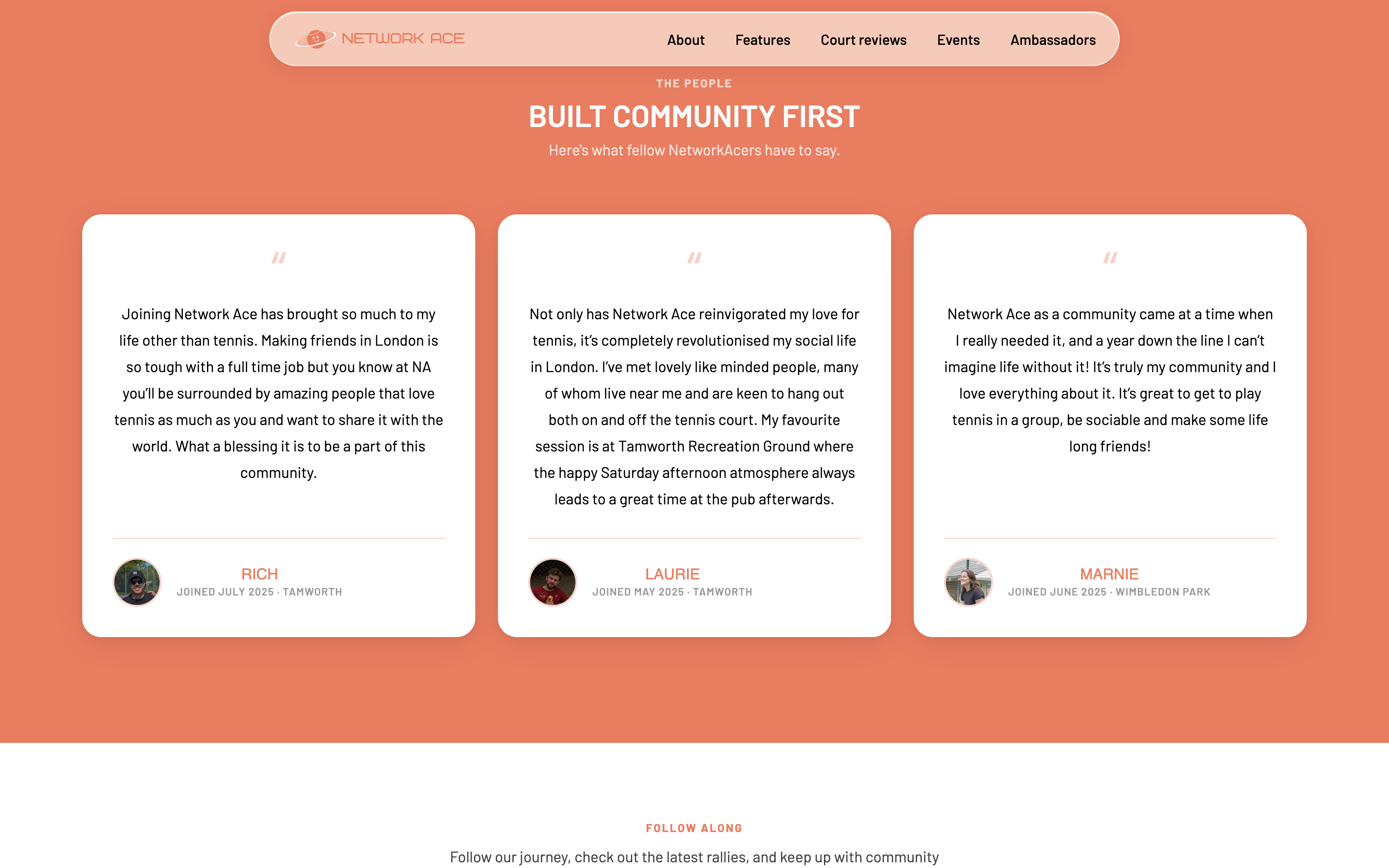
Implementation
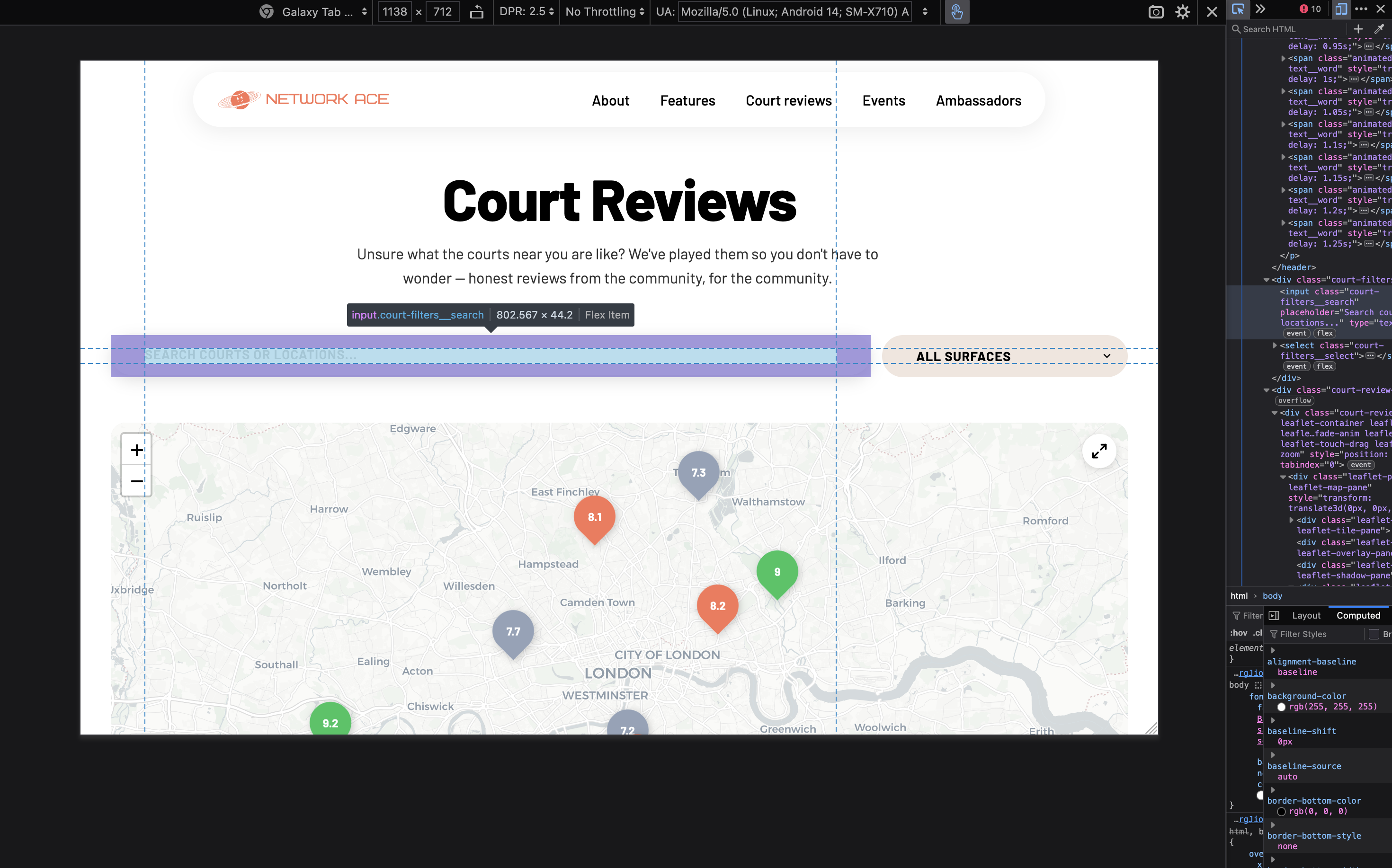
The visual decisions were carried through into a structured frontend where layout patterns, animated sections, and typography behaved consistently across the site.
The polish came from the system working together rather than from any one flashy interaction.
I work across technical consulting, UX structure, SEO-conscious delivery, and frontend implementation for products that need to feel credible from the first interaction.